Police found 150 skulls at a “crime scene” in Mexico. It seems the victims, mostly girls, have been ritually decapitated over 1,000 years ago.
Warning: Undefined variable $post_id in /home/webpages/lima-city/booktips/wordpress_de-2022-03-17-33f52d/wp-content/themes/fast-press/single.php on line 26
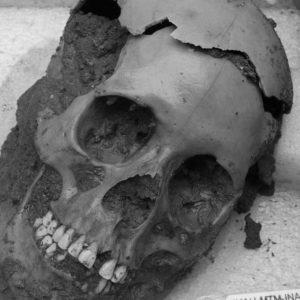
When Mexican police found a pile of about 150 skulls in a cave close to the Guatemalan border, they thought they had been a crime scene, and took the bones to the state capital.
It turns out it was a really cold case.
It took a decade of exams and analysis to determine the skulls had been from sacrificial victims killed between A.D. 900 and 1200, the National Institute of Anthropology and Historical past mentioned Wednesday.
A cranium discovered at the archaeological site Templo Mayor sits on display in Mexico City, Friday, Oct. 5, 2012. Alexandre Meneghini / AP"Believing they were looking at a crime scene, investigators collected the bones and began inspecting them in Tuxtla Gutierrez," the state capital, the institute, often known as INAH, said in a statement.
The police in 2012 weren't being silly; the border space across the city of Frontera Comalapa in southern Chiapas state has lengthy been stricken by violence and immigrant trafficking. And pre-Hispanic cranium piles in Mexico often show a gap bashed by each side of each skull, and were often present in ceremonial plazas, not caves.
But specialists said Wednesday the victims in the cave had most likely been ritually decapitated and the skulls placed on display on a type of trophy rack generally known as a "tzompantli." Spanish conquistadores wrote about seeing such racks within the 1520s, and a few Spaniards' heads even wound up on them.
Whereas normally strung on wood poles using holes bashed by way of them - the widespread observe among the many Aztecs and different cultures - specialists say the cave skulls might have rested atop poles, reasonably than being strung on them.
Curiously, there have been more females than males among the victims, and none of them had any enamel.
In light of the cave expertise, archaeologist Javier Montes de Paz mentioned people should most likely call archaeologists, not police.
"When folks discover one thing that could be in an archaeological context, don't touch it and notify native authorities or immediately the INAH," he mentioned.
In 2015, archaeologists discovered the primary trophy rack of sacrificed human skulls at Mexico City's Templo Mayor Aztec destroy web site.
That very same year, artifacts found on the Zultepec-Tecoaque ruin website revealed proof from when tons of of individuals in a Spanish-led convoy were captured, sacrificed and apparently eaten.
A 2016 examine discovered that in societies the place social hierarchies were taking shape, ritual human sacrifices targeted poor folks, serving to the highly effective control the lower lessons and keep them of their place.
Trending Information