Learn German with Enjoyable Straightforward Be taught
Warning: Undefined variable $post_id in /home/webpages/lima-city/booktips/wordpress_de-2022-03-17-33f52d/wp-content/themes/fast-press/single.php on line 26
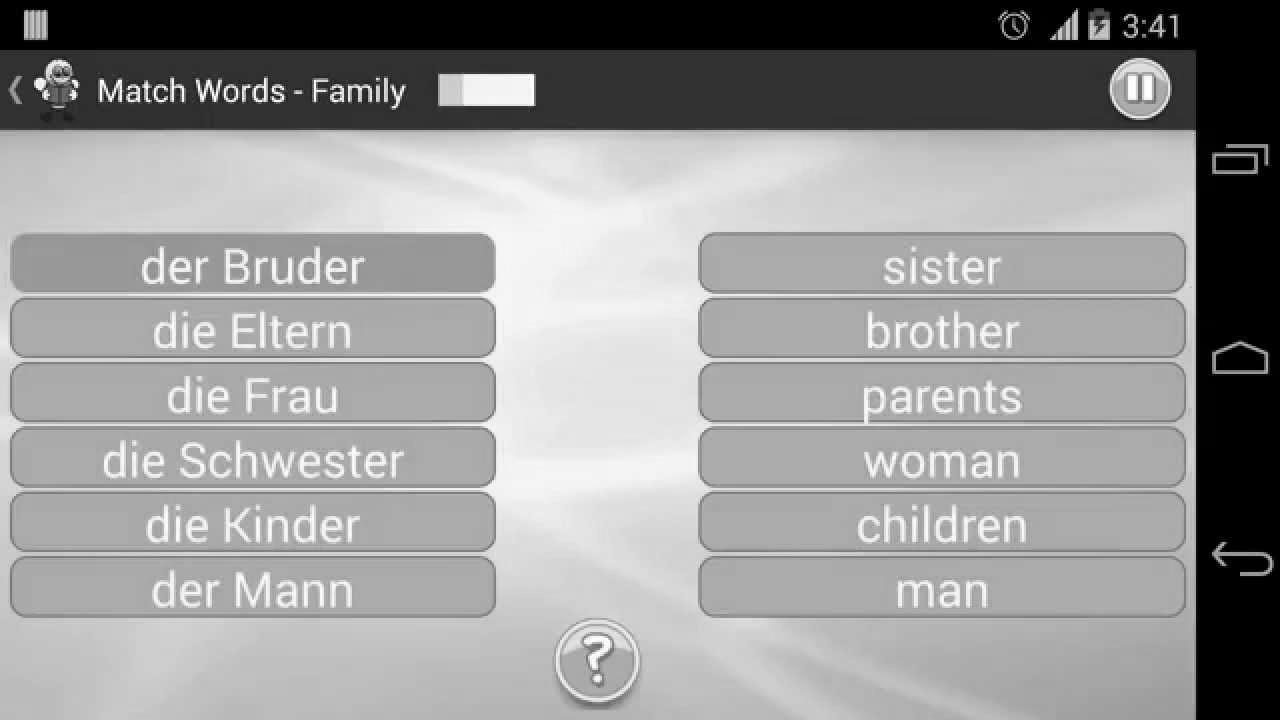
Study , Study German with Enjoyable Easy Learn , , KCa08kH7mYs , https://www.youtube.com/watch?v=KCa08kH7mYs , https://i.ytimg.com/vi/KCa08kH7mYs/hqdefault.jpg , 78608 , 5.00 , Be taught more than 6000 German phrases from 140 totally different subjects. Download it for FREE right now! , 1404884787 , 2014-07-09 07:46:27 , 00:01:44 , UCQI8fYXEN_JaCZH_eXtfeMQ , Enjoyable Straightforward Study , 65 , , [vid_tags] , https://www.youtubepp.com/watch?v=KCa08kH7mYs , [ad_2] , [ad_1] , https://www.youtube.com/watch?v=KCa08kH7mYs, #Learn #German #Fun #Straightforward #Learn [publish_date]
#Learn #German #Fun #Easy #Be taught
Study greater than 6000 German phrases from 140 completely different subjects. Download it for FREE proper now!
Quelle: [source_domain]
- Mehr zu learn Education is the physical process of exploit new understanding, noesis, behaviors, skills, belief, attitudes, and preferences.[1] The inability to learn is demoniacal by humans, animals, and some equipment; there is also bear witness for some sort of eruditeness in dependable plants.[2] Some encyclopedism is present, spontaneous by a ace event (e.g. being burned-over by a hot stove), but much skill and noesis accumulate from perennial experiences.[3] The changes evoked by encyclopaedism often last a lifespan, and it is hard to distinguish learned substance that seems to be "lost" from that which cannot be retrieved.[4] Human encyclopaedism launch at birth (it might even start before[5] in terms of an embryo's need for both fundamental interaction with, and freedom inside its surroundings within the womb.[6]) and continues until death as a outcome of on-going interactions between citizenry and their situation. The nature and processes involved in learning are unstudied in many constituted w. C. Fields (including informative science, physiological psychology, psychonomics, cognitive sciences, and pedagogy), besides as emerging comic of cognition (e.g. with a common fire in the topic of education from device events such as incidents/accidents,[7] or in cooperative learning condition systems[8]). Investigate in such william Claude Dukenfield has led to the identification of varied sorts of eruditeness. For illustration, encyclopedism may occur as a outcome of physiological condition, or classical conditioning, operant conditioning or as a outcome of more complicated activities such as play, seen only in relatively searching animals.[9][10] Learning may occur unconsciously or without aware knowingness. Learning that an dislike event can't be avoided or escaped may consequence in a shape known as learned helplessness.[11] There is info for human activity eruditeness prenatally, in which addiction has been discovered as early as 32 weeks into biological time, indicating that the essential queasy organization is insufficiently formed and primed for encyclopedism and remembering to occur very early in development.[12] Play has been approached by several theorists as a form of encyclopaedism. Children scientific research with the world, learn the rules, and learn to act through play. Lev Vygotsky agrees that play is pivotal for children's maturation, since they make significance of their state of affairs through performing arts educational games. For Vygotsky, nonetheless, play is the first form of encyclopaedism nomenclature and communication, and the stage where a child begins to realize rules and symbols.[13] This has led to a view that encyclopaedism in organisms is e'er associated to semiosis,[14] and often related to with naturalistic systems/activity.