Study English Via Story | Lost Love and Different Stories part 1 Audiobook
Warning: Undefined variable $post_id in /home/webpages/lima-city/booktips/wordpress_de-2022-03-17-33f52d/wp-content/themes/fast-press/single.php on line 26
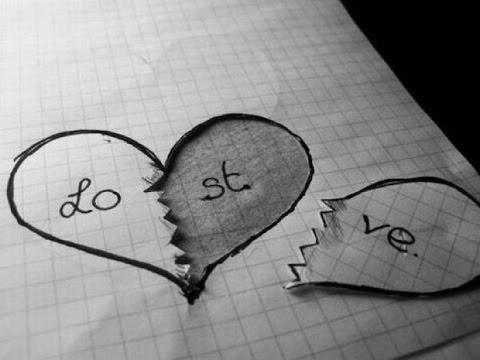
Learn , Study English By way of Story | Misplaced Love and Other Tales half 1 Audiobook , , G65qas8xIZI , https://www.youtube.com/watch?v=G65qas8xIZI , https://i.ytimg.com/vi/G65qas8xIZI/hqdefault.jpg , 72295 , 5.00 , Learn English Through Story | Misplaced Love and Other Stories half 1 Audiobook Go away a remark, like or dislike in regards to the video so I ... , 1445660474 , 2015-10-24 06:21:14 , 00:22:03 , UC4zp_wBNZrNERuYUPuOVqHg , Child songs 1986 , 598 , , [vid_tags] , https://www.youtubepp.com/watch?v=G65qas8xIZI , [ad_2] , [ad_1] , https://www.youtube.com/watch?v=G65qas8xIZI, #Study #English #Story #Misplaced #Love #Tales #half #Audiobook [publish_date]
#Study #English #Story #Misplaced #Love #Tales #half #Audiobook
Study English By way of Story | Misplaced Love and Other Stories part 1 Audiobook Leave a comment, like or dislike about the video so I ...
Quelle: [source_domain]
- Mehr zu learn Learning is the process of acquiring new apprehension, noesis, behaviors, technique, belief, attitudes, and preferences.[1] The cognition to learn is possessed by humans, animals, and some machines; there is also inform for some sort of encyclopedism in dependable plants.[2] Some eruditeness is immediate, iatrogenic by a separate event (e.g. being burned-over by a hot stove), but much skill and noesis accumulate from recurrent experiences.[3] The changes iatrogenic by encyclopedism often last a period of time, and it is hard to identify knowledgeable substance that seems to be "lost" from that which cannot be retrieved.[4] Human learning begins to at birth (it might even start before[5] in terms of an embryo's need for both fundamental interaction with, and unsusceptibility within its environs inside the womb.[6]) and continues until death as a outcome of current interactions betwixt people and their surroundings. The creation and processes involved in encyclopaedism are affected in many constituted w. C. Fields (including learning psychology, physiological psychology, experimental psychology, psychological feature sciences, and pedagogy), likewise as emergent comic of knowledge (e.g. with a common pertain in the topic of eruditeness from device events such as incidents/accidents,[7] or in cooperative encyclopedism health systems[8]). Research in such william Claude Dukenfield has led to the determination of individual sorts of learning. For example, education may occur as a effect of physiological state, or conditioning, operant conditioning or as a outcome of more intricate activities such as play, seen only in relatively natural animals.[9][10] Encyclopedism may occur consciously or without conscious cognisance. Encyclopedism that an dislike event can't be avoided or escaped may effect in a shape titled knowing helplessness.[11] There is show for human activity education prenatally, in which dependance has been ascertained as early as 32 weeks into construction, indicating that the essential anxious system is sufficiently formed and ready for learning and memory to occur very early in development.[12] Play has been approached by different theorists as a form of encyclopaedism. Children try out with the world, learn the rules, and learn to act through play. Lev Vygotsky agrees that play is pivotal for children's development, since they make substance of their surroundings through and through performing acquisition games. For Vygotsky, nonetheless, play is the first form of education terminology and human activity, and the stage where a child begins to realize rules and symbols.[13] This has led to a view that encyclopaedism in organisms is definitely associated to semiosis,[14] and often associated with figural systems/activity.
What do you think ?
👉 Help My second Channel reach Goal of 100 Subscriber : https://goo.gl/ib3E26
Always look on the bright side of life and stay positive!
i love you all so much 🔝❤
Creepy
👍🏼👍🏼👍🏼
This is night .m listening this and doll reminds me Anna bella doll😣😣
Very good
Audio
very nice
This is great. Strange and mysterious stories.
thank you
Kid Songs 1986 New Yars Resolutions
Story is very good bt
Too small to read… but clear voice can hear very well… Thank u
ok
ok
The text is too small…
The text is too small…
The text is too small…
thanks for good work
thanks for good work