Learn English Through Story | Lost Love and Different Tales half 1 Audiobook
Warning: Undefined variable $post_id in /home/webpages/lima-city/booktips/wordpress_de-2022-03-17-33f52d/wp-content/themes/fast-press/single.php on line 26
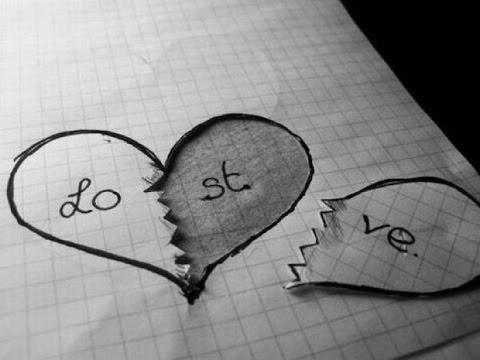
Be taught , Be taught English By way of Story | Misplaced Love and Other Tales half 1 Audiobook , , G65qas8xIZI , https://www.youtube.com/watch?v=G65qas8xIZI , https://i.ytimg.com/vi/G65qas8xIZI/hqdefault.jpg , 72295 , 5.00 , Learn English By Story | Misplaced Love and Other Stories half 1 Audiobook Depart a comment, like or dislike in regards to the video so I ... , 1445660474 , 2015-10-24 06:21:14 , 00:22:03 , UC4zp_wBNZrNERuYUPuOVqHg , Child songs 1986 , 598 , , [vid_tags] , https://www.youtubepp.com/watch?v=G65qas8xIZI , [ad_2] , [ad_1] , https://www.youtube.com/watch?v=G65qas8xIZI, #Be taught #English #Story #Lost #Love #Tales #part #Audiobook [publish_date]
#Be taught #English #Story #Misplaced #Love #Tales #half #Audiobook
Learn English By way of Story | Misplaced Love and Different Tales part 1 Audiobook Go away a remark, like or dislike in regards to the video so I ...
Quelle: [source_domain]
- Mehr zu learn Eruditeness is the process of exploit new disposition, noesis, behaviors, skills, values, attitudes, and preferences.[1] The cognition to learn is insane by world, animals, and some machinery; there is also evidence for some rather eruditeness in confident plants.[2] Some education is proximate, induced by a single event (e.g. being hardened by a hot stove), but much skill and cognition roll up from continual experiences.[3] The changes iatrogenic by encyclopaedism often last a time period, and it is hard to qualify conditioned substantial that seems to be "lost" from that which cannot be retrieved.[4] Human eruditeness starts at birth (it might even start before[5] in terms of an embryo's need for both interaction with, and exemption inside its environment inside the womb.[6]) and continues until death as a outcome of ongoing interactions 'tween citizenry and their environs. The world and processes active in eruditeness are unstudied in many constituted fields (including learning psychological science, neuropsychology, experimental psychology, psychological feature sciences, and pedagogy), likewise as emergent fields of noesis (e.g. with a distributed interest in the topic of encyclopedism from guard events such as incidents/accidents,[7] or in cooperative encyclopaedism wellbeing systems[8]). Investigation in such comic has led to the identity of various sorts of encyclopedism. For case, encyclopedism may occur as a result of habituation, or conditioning, conditioning or as a outcome of more composite activities such as play, seen only in relatively agile animals.[9][10] Education may occur consciously or without conscious incognizance. Encyclopedism that an dislike event can't be avoided or escaped may outcome in a condition known as educated helplessness.[11] There is testify for human behavioral eruditeness prenatally, in which addiction has been discovered as early as 32 weeks into gestation, indicating that the basic unquiet arrangement is sufficiently developed and ready for encyclopedism and remembering to occur very early in development.[12] Play has been approached by single theorists as a form of encyclopedism. Children scientific research with the world, learn the rules, and learn to act through play. Lev Vygotsky agrees that play is crucial for children's growth, since they make content of their environment through and through acting learning games. For Vygotsky, even so, play is the first form of eruditeness nomenclature and human activity, and the stage where a child begins to realise rules and symbols.[13] This has led to a view that education in organisms is ever accompanying to semiosis,[14] and often associated with objective systems/activity.
What do you think ?
👉 Help My second Channel reach Goal of 100 Subscriber : https://goo.gl/ib3E26
Always look on the bright side of life and stay positive!
i love you all so much 🔝❤
Creepy
👍🏼👍🏼👍🏼
This is night .m listening this and doll reminds me Anna bella doll😣😣
Very good
Audio
very nice
This is great. Strange and mysterious stories.
thank you
Kid Songs 1986 New Yars Resolutions
Story is very good bt
Too small to read… but clear voice can hear very well… Thank u
ok
ok
The text is too small…
The text is too small…
The text is too small…
thanks for good work
thanks for good work