Afghan girls deplore Taliban’s new order to cowl faces in public | Taliban Information
Warning: Undefined variable $post_id in /home/webpages/lima-city/booktips/wordpress_de-2022-03-17-33f52d/wp-content/themes/fast-press/single.php on line 26
2022-05-10 05:21:17
#Afghan #ladies #deplore #Talibans #order #cover #faces #public #Taliban #Information
The Taliban has issued yet one more decree imposing additional restrictions on Afghan girls, and criminalising their clothes.
While the Taliban have all the time imposed restrictions to control the our bodies of Afghan girls, the decree is the first for this regime where felony punishment is assigned for violation of the costume code for ladies.
The Taliban’s just lately reinstated Ministry for the Propagation of Virtue and Prevention of Vice introduced on Saturday that it's “required for all respectable Afghan women to wear a hijab”, or headscarf.
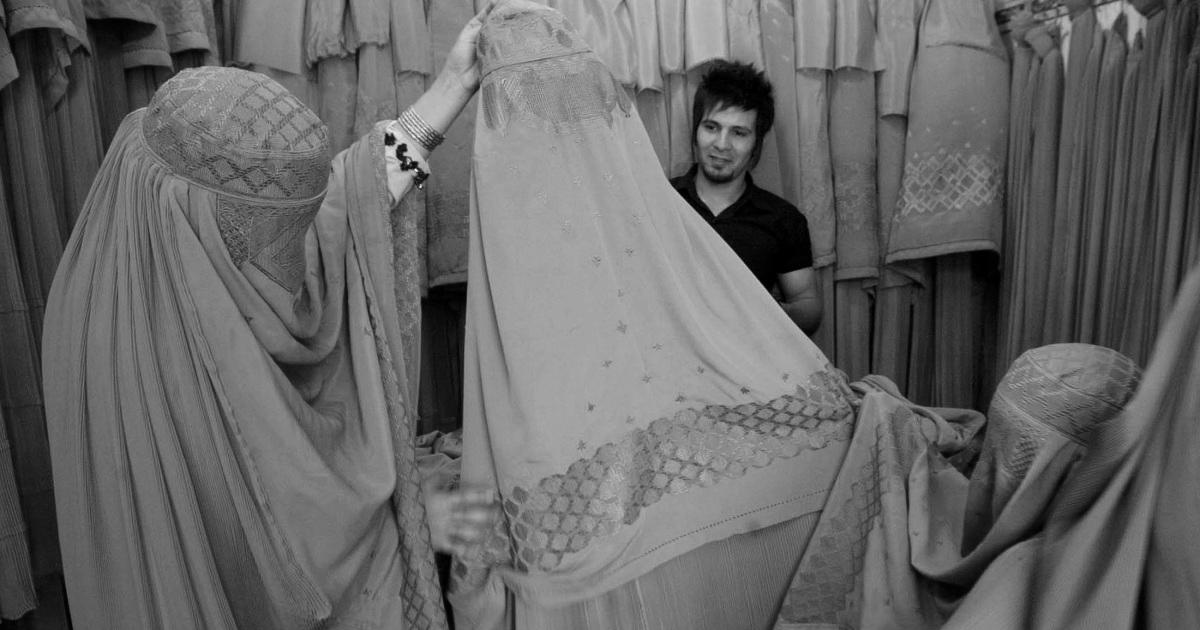
The ministry, in a statement, identified the chadori (the blue-coloured Afghan burqa or full-body veil) as the “best hijab” of alternative.
Additionally acceptable as a hijab, the assertion declared, is a long black veil protecting a woman from head to toe.
The ministry assertion supplied an outline: “Any garment masking the body of a woman is considered a hijab, supplied that it's not too tight to characterize the physique components neither is it skinny sufficient to reveal the body.”
Punishment was additionally detailed: Male guardians of offending ladies will receive a warning, and for repeated offences they will be imprisoned.
“If a lady is caught with out a hijab, her mahram (a male guardian) shall be warned. The second time, the guardian might be summoned [by Taliban officials], and after repeated summons, her guardian will probably be imprisoned for three days,” based on the assertion.
Akif Muhajir, a spokesman for the ministry, stated that government staff who violate the hijab rule can be fired.
And male guardians found guilty of repeated offences “shall be sent to the courtroom for further punishment”, he stated.
A girl sits with Afghan women ready to receive bread in Kabul, Afghanistan in January 2022 [File photo: Ali Khara/Reuters] (Reuters)‘Third-class citizens’The new decree is the latest in a collection of edicts proscribing women’s freedoms imposed since the Taliban seized power in Afghanistan last summer season. News of the decree was acquired with widespread condemnation and outrage by Afghan ladies and activists.
“Why have they diminished women to [an] object that is being sexualised?” asked Marzia, a 50-year-old university professor from Kabul.
The professor’s title has been changed to guard her id, as she fears Taliban repercussions for expressing her views publicly.
“I'm a training Muslim and value what Islam has taught me. If, as Muslim men, they've an issue with my hijab, then they need to observe their own hijab and decrease their gaze,” she stated.
“Why ought to we be handled like third-class residents as a result of they can't apply Islam and management their sexual needs?” the professor asked, anger evident in her voice.
As an unmarried lady who looks after her mom, Marzia does not have a mahram. She is the sole breadwinner in her small family.
“I am single, and my father died very long ago, and I look after my mom,” she said.
“The Taliban killed my brother, my solely mahram, in an attack 18 years ago. Would they now have me borrow a mahram for them [to] punish me next time?” she requested.
Marzia has repeatedly been stopped by the Taliban whereas travelling on her own to work in her university, which is a violation of an earlier edict that forbids women from travelling alone.
“They often stop the taxi I am in, asking where my mahram is,” Marzia mentioned.
“When I try to clarify I don’t have one, they won’t pay attention. It doesn’t matter that I'm a revered professor; they present no dignity and order the taxi drivers to desert me on the roads,” she mentioned.
“I have had to walk several kilometres to house or my lessons on multiple event.”
‘Dignity and agency’Marzia’s sentiments were echoed by girls’s rights activists primarily based in Afghanistan and outdoors the nation.
Activist Huda Khamosh was a pacesetter in the women-led demonstrations in Kabul that occurred after the Taliban takeover final summer. She evaded arrest during a Taliban crackdown on feminine protestors in February. Later, Khamosh confronted Taliban leaders at a conference in Norway, demanding that they release her fellow feminine protestors held in Kabul.
“The Taliban regime was imposed on us, and their self-imposed guidelines haven't any authorized foundation, and send a incorrect message to the younger women of this generation in Afghanistan, decreasing their identity to their garments,” said Khamosh, who urged Afghan girls to lift their voices.
“Never be silent,” she stated.
“The rights granted to a woman [in Islam] are more than just the correct to decide on one’s husband and get married,” Khamosh stated, referring to a Taliban decree on rights that focused only on the right to marriage, but did not deal with issues of work and training for girls.
“Women have dignity and agency over their lives,” she said.
“Twenty years [of gains made by Afghan women] is not insignificant progress to lose in a single day. We won this on our personal might, preventing the patriarchal society, and nobody can take away us from the group.”
The activists additionally said they'd predicted the present developments in Afghanistan, and placed equal blame on the worldwide group for not recognising the urgency of the scenario.
Samira Hamidi, an Afghan activist and senior researcher at Amnesty Worldwide, stated that even after the Taliban’s take over final August, Afghan women continued to insist that the international group hold girls’s rights as “a non-negotiable component of their engagement and negotiations with the Taliban”.
However the international neighborhood had failed Afghan women but again, Hamidi said.
“For a decade Afghan women have been warning all actors concerned in peace negotiations about what returning the Taliban to power will means to women,” she said.
The present situation has resulted from flawed insurance policies and the worldwide community’s lack of “understanding on how critical girls’s rights violations” are in Afghanistan, she stated.
“It is a blatant violation of the fitting to freedom of alternative and movement, and the Taliban got the area and time [by the international community] to impose further reprisals and systematic discrimination,” Hamidi said.
Khamosh, the activist, agrees.
“The world is betraying an entire generation with their silence,” she stated.
“It is a crime towards humanity to permit a country to show into a jail for half its inhabitants,” she stated, including that repercussions from the continuing scenario in Afghanistan will be felt globally.
Marzia, the professor, shared an identical sense of disappointment.
“We are a country that has produced a number of the most good women leaders. I used to show my students the worth of respecting and supporting women,” she said.
“I gave hope to so many young girls and all of that has been thrown in [the] trash as meaningless,” she stated.
“My heart breaks into items with each new ‘regulation’ and decrees they challenge that contradicts our Islamic and Afghan values.”
Quelle: www.aljazeera.com